


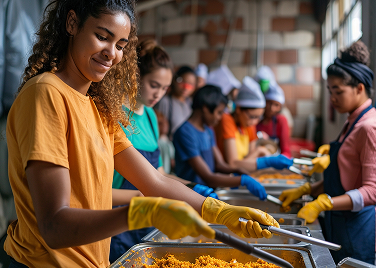
Urban Farming: Growing Fresh Food for Those in Need
10 FEB
Education is a fundamental right, yet millions of children worldwide lack access to quality schooling. Breaking the cycle of poverty starts with education.
The Role of Education in Poverty Reduction
- Provides skills for better employment opportunities.
- Empowers individuals to make informed life decisions.
- Improves overall community development.
How We Can Help
- Sponsor a child’s education.
- Donate books and school supplies.
- Support educational programs in underserved areas.
Education is the key to a brighter future. Let’s work together to make it accessible for everyone!
Education is one of the most powerful tools for breaking the cycle of poverty and creating long-term economic stability for individuals and communities. It provides people with the knowledge, skills, and opportunities needed to improve their lives and contribute positively to society. Around the world, access to quality education has proven to be a key driver of social mobility, allowing people to move beyond the economic constraints they were born into.
The Link Between Education and Poverty
Poverty and lack of education are deeply interconnected. Children from low-income families often struggle to access quality education due to financial constraints, lack of proper infrastructure, and social barriers. Without education, they are more likely to remain trapped in a cycle of low-paying jobs, unemployment, and limited opportunities. This cycle continues across generations unless an intervention—such as access to education—provides a way out.
Education empowers individuals by giving them the tools to secure better jobs, earn higher incomes, and make informed decisions about health, family planning, and financial management. It also promotes critical thinking and problem-solving skills, which are essential for overcoming life’s challenges.
How Education Transforms Lives
1. Increases Employment Opportunities and Income Levels
A well-educated person has a greater chance of securing a stable and well-paying job. Higher education, vocational training, and skill development programs open doors to careers that offer financial security. Studies have shown that individuals with a high school diploma or a college degree earn significantly more over their lifetime than those without formal education.
2. Promotes Economic Growth and Social Development
When a society invests in education, the entire economy benefits. Educated individuals contribute to a country’s GDP by participating in higher-skilled industries, fostering innovation, and driving economic progress. Education also reduces reliance on social welfare programs and increases tax revenues, which governments can reinvest into public services and infrastructure.
3. Breaks Generational Poverty
One of the most significant ways education breaks the cycle of poverty is through generational impact. When parents receive an education, they are more likely to value and prioritize their children’s education. This creates a positive cycle where each generation is better equipped to achieve financial stability and social mobility.
4. Reduces Inequality and Empowerment of Marginalized Groups
Education plays a crucial role in reducing social inequalities, particularly for marginalized communities. It provides women, minorities, and economically disadvantaged individuals with equal opportunities to succeed. Educated women, for example, are more likely to have healthier families, higher incomes, and greater independence.
5. Improves Health and Well-Being
Education is closely linked to better health outcomes. Educated individuals are more likely to make informed health decisions, seek medical care when needed, and adopt healthier lifestyles. Education also contributes to lower child mortality rates, reduced malnutrition, and increased awareness about diseases such as HIV/AIDS and malaria.
Challenges to Education and Solutions
While education is a powerful tool for poverty eradication, many barriers prevent its widespread access, including:
- Lack of funding for schools and infrastructure
- High costs of education and materials
- Cultural and gender-based discrimination
- Poor teacher training and low-quality education
- Political instability and conflicts
To address these challenges, governments, organizations, and communities must work together to invest in education. Policies that promote free and accessible education, scholarships for underprivileged students, and improvements in teacher training can help create an inclusive learning environment.
Conclusion
Education is a fundamental human right and a proven strategy for lifting individuals and communities out of poverty. By investing in education, we are not only improving lives but also strengthening economies, promoting equality, and creating a more sustainable and prosperous future for all. Breaking the cycle of poverty begins with a commitment to ensuring that every child, regardless of their background, has access to quality education and the opportunity to reach their full potential.
Education completely changed my life. Coming from a low-income background, I never imagined I would be able to break free from poverty.
Sarah Mitchell